How Middleton Businesses Organize Storage Better
Find Out More →Walk past the Middleton Industrial Estate on any given week and you'll spot a pattern. The businesses running out of those units—workshops, traders, small manufacturers—they treat their storage space like real estate. They've got systems. They know what's in there, they can find it fast, and they don't waste an inch. Most homeowners, by contrast, rent a unit and treat it like a cupboard they're hoping to forget about.
The gap between how local Middleton businesses approach storage and how homeowners do is worth closing. You don't need to run a workshop to benefit from the way they think. A few practical shifts in how you pack, organize, and maintain your storage can save you money, time, and headaches down the line.
Why businesses actually plan their storage
Here's the first difference: businesses in Middleton don't just dump things in a unit and hope. They plan what goes in before anything arrives.
That might sound obvious, but it's worth unpacking. A small trader knows exactly what they'll store because they're paying for it weekly. Space costs money. Dead space is waste. So they sketch out roughly how much room they need, what items are accessed often and what sits dormant, and whether anything needs climate control or particular conditions. They build a rough map in their head—sometimes on paper—before the hire van pulls up.
Most homeowners skip this step entirely. They rent a unit, fill it as things come in, and end up paying for far more space than they actually use because there's no internal organization. One corner gets blocked by a sofa that shouldn't have been stored at all. Boxes stack haphazardly. Nothing's labeled.
Start by asking yourself: what am I actually storing, and why? How often will I need it? Could any of it go to the charity shop instead? Then sketch a rough plan. What works at home mirrors what works in business—once you know what's going in, you can choose the right unit size and arrange things sensibly from day one.
How they use vertical space—and why you should too
Businesses don't spread things out horizontally across a unit. They stack strategically and use the full height of the room.
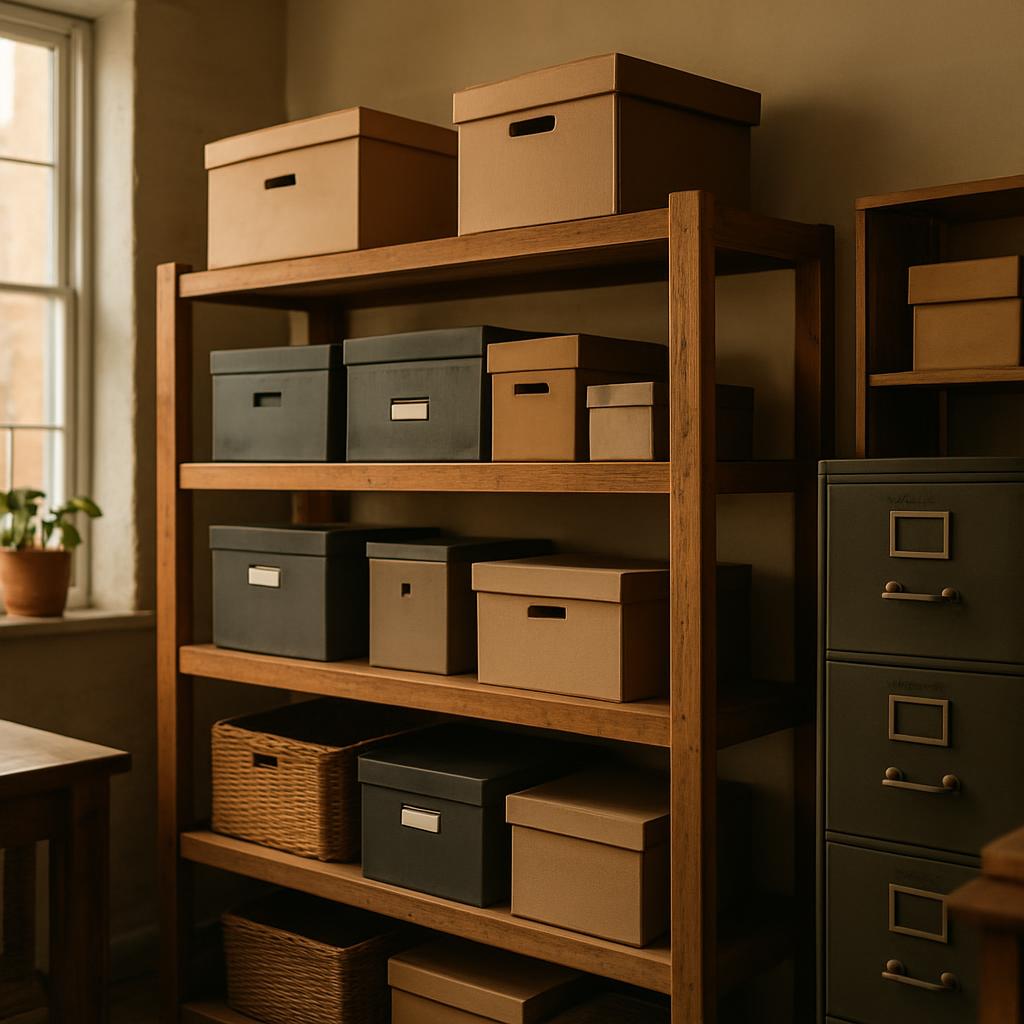
This isn't fancy. It's just smart. Heavy items—boxes of files, tools, stock—go on sturdy shelving units or pallets at ground level. Lighter things stack on top. Seasonal items or rarely-used boxes go higher up, accessed with a step ladder when needed. Nothing just sits loose on the floor taking up premium space.
Homeowners often do the opposite. They stack boxes three high and call it a day, leaving ten feet of empty air above. That's rented space you're paying for but not using.
Invest in some cheap shelving or racking. It costs less than a month's rent on wasted space. Stack boxes vertically where they fit. Keep frequently-used items at waist height. This alone can cut your unit size—and your bill—by 20-30%.
Labeling and rotation: how businesses stay organized
Open any business storage unit and you'll see labels. Not always fancy ones. Sometimes just a marker scrawled on a box. But they're there. That business owner knows what's in each box, where it is, and when it went in.
This matters for two reasons. First, you actually use what you store. If you can't find something, you'll likely buy it again. Second, you catch rot, damp, or pests early. A labeled box that's been undisturbed for two years is one you might want to check on.
Label everything, even if it feels tedious. Use a permanent marker on the box itself (tape falls off). Write the contents, the date it went in, and if it's seasonal or permanent. Keep a simple list on your phone or a piece of paper stuck inside the unit door showing what's stored where. This simple habit is one reason businesses store smarter—they can find things without excavating, and they know what they've actually got.
Maintenance checks: the thing most homeowners skip
Businesses visit their storage units regularly—sometimes weekly, sometimes monthly depending on what's stored. They look for signs of damp, check that boxes aren't degrading, and make sure nothing's shifted or damaged.
Most homeowners rent a unit and don't look at it for six months. By then, if there's been a damp problem, it's done real damage. If mice got in, they've had time to settle.
Middleton can be prone to flooding in certain areas, and even units in better-located facilities can face condensation or moisture issues over time. Setting a calendar reminder to visit every four to eight weeks is one of the best habits you can adopt. Learn more about maintenance and storage best practices in our guide. Check for moisture, look for pests, and reorganize if things have shifted. Fifteen minutes every couple of months saves you hundreds in damaged belongings.
The takeaway: treat your storage like a business does
You don't need to run an operation out of an industrial estate to benefit from business-style storage thinking. Plan before you pack. Use the full height of your unit. Label everything. Check in regularly. Choose a unit size that fits what you actually need, not just what feels safe as a buffer.
If you're ready to get serious about your storage in Middleton, self storage Middleton can help you find the right space for your needs. Get in touch to discuss what size and type of unit would work best for you.
Looking for self storage near Middleton?
We have secure, flexible units available in the area. Get in touch with self storage Middleton today.
Find Out More →